Amazonian Defaunation and its Trophic Impacts on Herpetofaunal Communities
Abstract
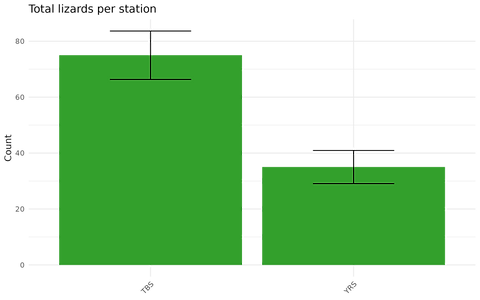
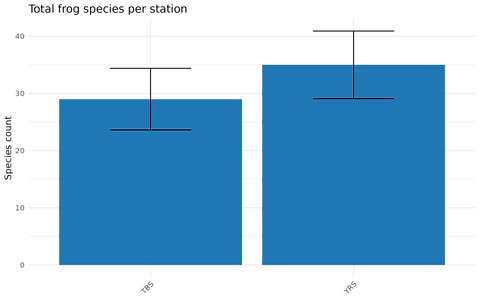
Defaunation, the localized decrease in large mammal populations, is a major threat to tropical ecosystems. This has many ecological consequences, including cascading trophic effects. Due to the decrease in large mammal populations, small mammal populations (such as rodents) tend to increase as a result of decreased predation and competition for food and other resources. Mammal-eating snake populations may increase as a result of this from the increased prey base. As juveniles, these snakes feed on other prey, including frogs and lizards, which means potentially higher predation pressure where snake populations are higher. This study aims to identify if defaunation impacts frog and lizard communities. To test this, we conducted visual detection surveys at a hunted (Yasuni Research Station- YRS) and an unhunted site (Tiputini Biodiversity Station- TBS), in order to determine if the community compositions of frogs and lizards differ. We expect overall population densities to be lower at the hunted sites due to an increase in predation. We also expect frog and lizard community compositions to differ due to the different feeding habits of snakes, such as hunting along the forest floor versus in the canopy. The indirect effects of defaunation, especially further down the food web, are not well studied. This study highlights the significance of defaunation and its effects on herpetofauna, helping to better understand the effects of defaunation on tropical forest ecosystems.